
6. Clean Up the Seam
After removing the stitching, inspect the fabric.
Pick out any remaining thread pieces and smooth the fabric flat.
If the old stitching has left tiny holes, those often become less noticeable after washing or gently pressing the fabric, depending on the material.
The Right Way to Hold a Seam Ripper
There’s no single required grip, but comfort and control are important.
Hold the handle as you would a small pen or craft tool.
Keep your other hand behind or beside the area you’re working on so you can stabilize the fabric.
Always work slowly when you’re close to the fabric.
A seam ripper is small, but its cutting edge is surprisingly sharp.
The Rounded Tip Has an Important Job
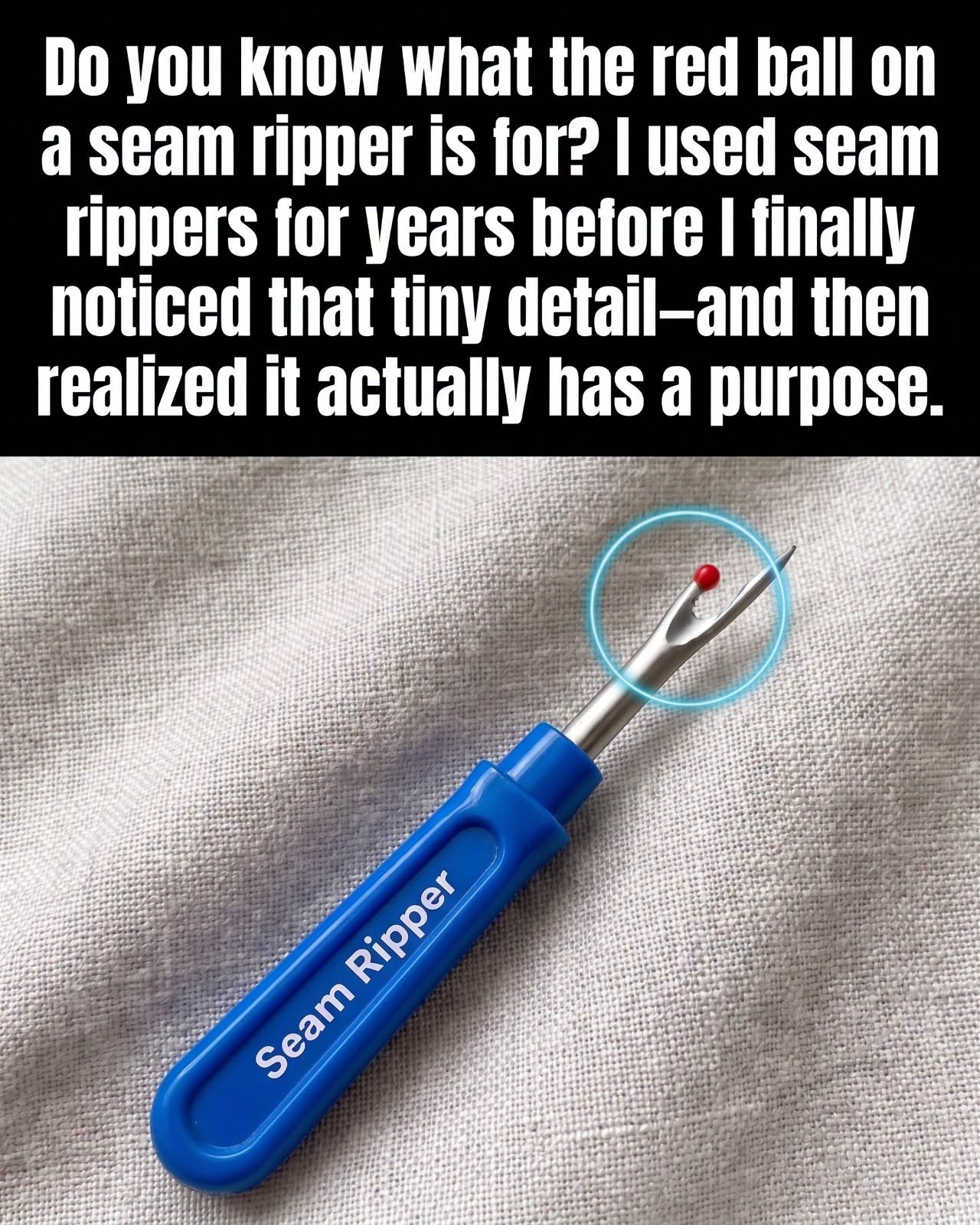
Look closely at the end of a typical seam ripper and you’ll notice something interesting.
One side has a sharp point, while the other end of the curved section has a rounded tip.
That rounded section is designed to help protect the fabric as you move the tool underneath stitches.
When possible, position the seam ripper so the rounded side rests against the fabric while the cutting edge faces the thread.
This makes the tool easier to control and reduces the chance of accidentally slicing the fabric.
How to Open a Buttonhole
A seam ripper is particularly useful for opening machine-stitched buttonholes.
First, place the fabric on a firm, stable surface.
Insert the pointed end into the center of the buttonhole, taking care not to push all the way through the fabric.
Make a small cut between the rows of stitching.
Then gradually open the buttonhole toward each end.